Review: Welcome to Our Hive – Bee SVG for Embroidery
As a designer who spends more time staring at stitch maps than most people spend on their phones, I approach every new digital embroidery file with a mix of curiosity and skepticism. We have all been there: you download a cute graphic, load it into your software, and realize the paths are a mess or the details are too tiny for real-world stitching. That is why I took a close look at the Welcome to Our Hive – Bee SVG before committing it to any client projects or personal handmade products. This isn't just about whether the image looks good on a screen; it is about how it translates into thread, fabric, and a tangible finished product.
First Impressions and Visual Personality
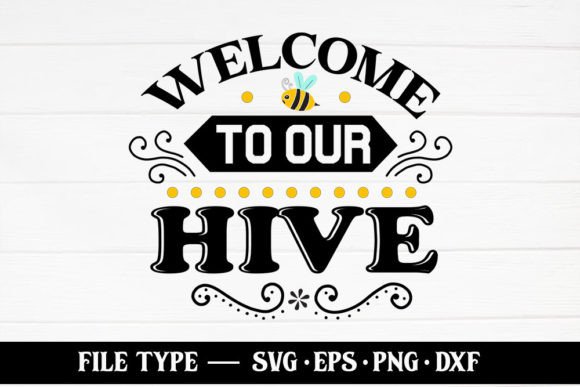
When I first opened the files included in the zip—specifically the SVG and EPS formats for digitizing—the immediate vibe was warm, inviting, and slightly rustic. The phrase "Welcome to Our Hive" paired with bee imagery creates a mood of community and home. Visually, the layout feels balanced, making it a strong candidate for center-chest logos on custom apparel or focal points on home decor. However, as an experienced reviewer, I know that a pretty vector does not automatically equal a great machine embroidery design. The real test lies in how those curves and lines hold up when converted into satin stitches and fill stitches.
The design's simplicity is its greatest asset. In the world of Crafts and Graphics, overly complex illustrations often fail when scaled down. This design appears to have clean lines and distinct shapes, which suggests it will digitize well without requiring excessive underlay or complicated jump stitches. For an Etsy seller or small shop product creator, this visual clarity is crucial because it ensures the design remains legible even from a distance.
Real-World Application: The Tote Bag Test
To truly evaluate the Welcome to Our Hive – Bee SVG, I imagined a specific real-life scenario: creating a set of matching tote bags for a local farmer's market cooperative. These bags needed to be durable, washable, and visually appealing to customers looking for eco-friendly options. Using a heavy canvas tote bag design base, this bee-themed graphic fits perfectly. The theme aligns naturally with organic markets, gardening groups, or even a family reunion where the "hive" represents the family unit.
In this context, the design works beautifully as a sweatshirt embroidery pattern as well. Imagine a cozy crewneck for a beekeeper or a teacher whose classroom is their "hive." The text is large enough to be read easily, and the bee icon adds a charming graphical element that breaks up the typography. When stitched, assuming proper digitizing, the bold lines of the letters and the bee wings would pop against natural cotton or linen fabrics. This versatility makes it a valuable asset for anyone running a craft business who needs designs that can pivot between different product types without losing impact.
Technical Considerations for Stitching
While the vector file is editable and color-changeable, translating this into an actual embroidery project requires careful attention to technical details. If you are planning to use this for commercial embroidery, you must consider the stitch density. Large filled areas, such as the body of the bee or thick lettering, can become stiff if the density is too high. Conversely, if the density is too low, the fabric might show through, ruining the professional look.
There are specific scenarios where you need to proceed with caution. For instance, applying this design to a curved surface like a cap requires a different digitizing approach than flat hooping. The text "Welcome to Our Hive" might distort if not pushed correctly for a curved hoop. Similarly, if you are working with textured fabrics like waffle weave or fuzzy fleece, the fine details of the bee's wings could get lost. In these cases, simplifying the design or increasing the stitch width of the outlines might be necessary.
Another critical factor is the hoop size. Depending on how you scale the design, ensure it fits within your available hoop dimensions without needing a re-hoop, which can lead to alignment issues. For smaller applications, like a pocket logo on a child's baby embroidery item, you must verify that the small text remains readable. Tiny lettering often turns into a blob of thread if the stitch count is too high for the size. Always test the design on scrap fabric first. This simple step saves time, thread, and frustration.
Enhancing Brand Value and Customer Trust
For creative entrepreneurs and digital product sellers, the quality of your design assets directly impacts your brand consistency. A clean, well-executed design like Welcome to Our Hive – Bee SVG signals professionalism. When a customer receives a personalized gift or a boutique item with crisp stitching and clear graphics, their trust in your brand increases. This design has the potential to elevate the perceived value of your items, whether they are holiday gifts, wedding favors, or nursery decor.
The ability to change colors is a significant plus. You can adapt the bee to match specific brand colors or seasonal themes. A gold and black bee works for a classic look, while pastel yellows and soft grays might suit a nursery decor item better. This flexibility allows you to create cohesive collections for your online store or craft fair booth. Furthermore, using a consistent theme across various products—like matching aprons, tea towels, and pillow covers—helps in creating a recognizable brand identity.
Practical Notes for Designers and Makers
Before you start stitching or selling, here are a few practical steps to ensure success with this file:
- Check Licensing: Always confirm the license terms provided with the download. Ensure you are allowed to use the design for commercial purposes if you plan to sell finished items.
- Stabilizer Selection: Choose the right stabilizer for your fabric. Cut-away stabilizer is often best for stretchy fabrics like t-shirts to prevent distortion, while tear-away might suffice for stable woven fabrics like tote bags.
- Thread Contrast: Experiment with thread colors. High contrast between the text and the background fabric ensures readability, especially for the "Welcome" text.
- Mockup Testing: Create printable mockups or digital previews to see how the design looks on different garment colors before committing to physical samples.
- Fabric Texture: Be mindful of fabric texture. Highly textured materials can obscure fine details, so adjust your stitch settings accordingly.
It is also worth noting that while the package includes SVG, EPS, DXF, and PNG files, it does not specify exact stitch counts or machine compatibility. These are vector files intended for digitizing or cutting, not necessarily pre-digitized embroidery files (.PES, .DST, etc.) ready for the machine. If you are not a digitizer yourself, you will need to convert these vectors into a stitch file using embroidery software, paying close attention to pull compensation and underlay settings.
Final Verdict
The Welcome to Our Hive – Bee SVG is a solid choice for designers looking to add a touch of warmth and community spirit to their projects. Its strength lies in its adaptable theme and clean visual structure, making it suitable for a wide range of applications from personalized gifts to boutique branding. However, its success ultimately depends on the skill of the person converting it into stitches. By respecting the limitations of fabric and thread, and by testing thoroughly, this design can become a staple in your library of design assets. Whether you are decorating a kitchen towel or launching a new line of apparel, this bee-themed graphic offers a sweet spot of charm and functionality, provided you handle the technical execution with care.